
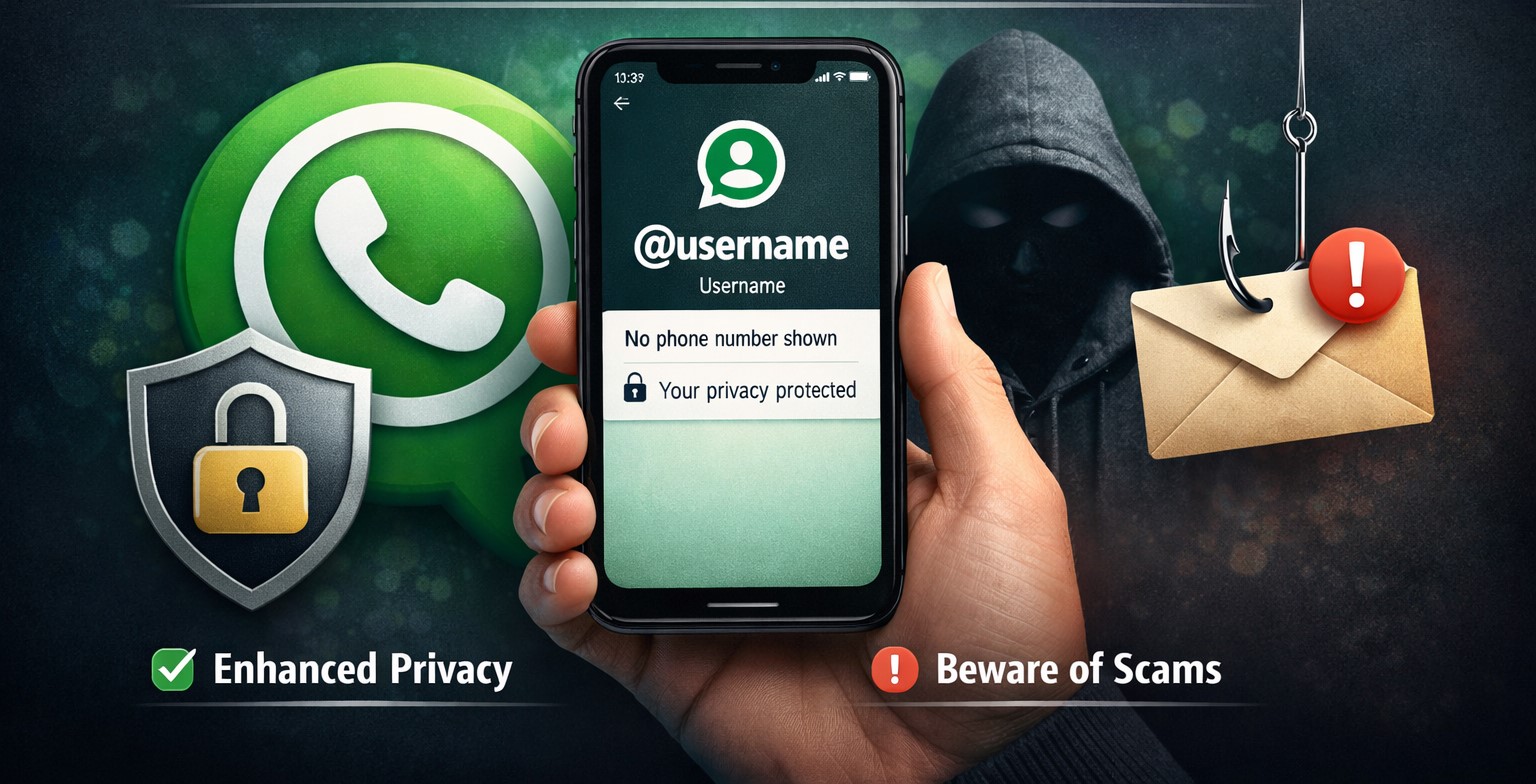
WhatsApp is finally introducing usernames, allowing users to connect without sharing their phone numbers. It’s one of the biggest changes to the platform in years, and while it’s great for privacy, it also brings new cybersecurity challenges.
The biggest advantage is obvious: your phone number stays private. Instead of giving your number to a client, seller, or someone you just met, you can simply share your username. This makes WhatsApp much more convenient for creators, freelancers, businesses, and anyone who values their privacy.
But every new identity system creates new risks.
Cybercriminals are likely to exploit usernames through impersonation and phishing. Fake accounts using names like @bank_support or @amaz0nhelp could trick users into sharing OTPs, passwords, or financial information. Since usernames look more professional than random phone numbers, they could make scams even more convincing.
Another concern is username squatting. Just like domain names and social media handles, valuable usernames could be claimed by people hoping to resell them or impersonate brands before the real owners secure them.
There’s also an interesting business angle worth considering: monetization.
If usernames become the primary identity on WhatsApp, Meta could eventually introduce paid verification for businesses, creators, and public figures ,similar to what we’ve seen on X, Instagram, and Facebook. It would help users identify genuine accounts while giving Meta another recurring revenue stream.It would be a win for businesses, users, and the company alike. However, a verified badge should never be treated as a guarantee that every message is safe or legitimate.
Overall, WhatsApp usernames are a positive move. Hiding phone numbers is a long-overdue privacy improvement, but users should remember that a username isn’t proof of identity.
As always, verify who you’re talking to, never share OTPs or passwords, and think twice before trusting accounts that look official.
Privacy is improving—but so are the tactics used by scammers.